
How to Deal with BMI Federal Credit Union (Lawsuits, Settlements, and More)
Relief is the app that helps you save on your debt with smart tools built to do the heavy lifting. With tools like debt reduction requests, you can request lower balances on eligible debts in minutes, and with legal support tools, get help responding to debt notices and review creditor communication for violations. Featured in TechCrunch and backed by leading investors, Relief has already onboarded billions in user's debt. Explore your options and see what's possible.
Who is BMI Federal Credit Union?
BMI Federal Credit Union is a member-owned credit union headquartered in Dublin, Ohio. It provides savings and checking accounts, credit cards, and auto, personal, and home loans to members in central Ohio. As the original creditor, BMI generally works past-due accounts internally before charge-off.Why Is BMI Federal Credit Union Contacting Me?
BMI Federal Credit Union is the company you originally borrowed from, which makes this first-party contact rather than a collection agency. Early on, an overdue account is usually worked by their own internal team, and the name on the letter is the same name on your statement.
If you're hearing from BMI Federal Credit Union, it's likely because:
- You fell behind on a credit card or loan you opened with them
- The account is still theirs and hasn't been sold or placed with an outside collector
- They believe you owe the full balance
This stage is the widest your options will be. Once an account is charged off and sold or placed, you're dealing with a third party who paid a fraction of the balance and has different incentives. Whether or not the debt is valid, you still have rights. And you have time to act before things escalate.
What happens if I Ignore BMI Federal Credit Union?
Ignoring BMI Federal Credit Union might feel easier in the short term, but it often leads to bigger consequences down the line. With an original creditor, the account doesn't just sit still—it moves through a predictable sequence.
If you ignore statements, notices, or phone calls:
- Interest and late fees may continue to accrue, increasing the amount owed
- The account may be reported to the credit bureaus as delinquent, harming your credit score
- Your credit line may be suspended or closed, and other accounts with them may be affected
- After a period of non-payment—commonly around 180 days on a credit card—the account is typically charged off
- Once charged off, it's usually sold to a debt buyer or placed with an outside agency or law firm
If you ignore a lawsuit:
- You risk a default judgment, which means the court automatically rules against you
- That judgment can lead to wage garnishment, frozen bank accounts, or even property liens
- In many states, judgments can remain enforceable for years—and they can be renewed. The longer you wait, the fewer options you may have to settle or negotiate.
The better approach is to understand your rights and take proactive steps to resolve it. Relief can help you do all of that—without the guesswork.
Most people sued over a debt never respond — and lose by default. Relief helps you answer in time.
See howWhat are my options with BMI Federal Credit Union?
When you're behind with BMI Federal Credit Union, it can feel overwhelming—but you do have a path forward. Here are three ways you can resolve or defend against the debt:
- Make sure the debt is legitimate
- Settle your debt and get a balance reduction
- Protect yourself in lawsuits
There's also a fourth worth asking about while the account is still theirs, covered below: a hardship program.
How do I make sure the debt is legitimate?
Before doing anything else, confirm that the debt is accurate. Start by asking:
- Is the debt actually yours?
- Is the amount they claim correct, including any fees and interest added since you fell behind?
- Is the debt still legally collectible (within the statute of limitations)?
- Does what's on your credit report match what they're claiming?
Balances get restated and fees get added, and the figure on a notice doesn't always match the figure on your credit report. If you spot anything incorrect, dispute it in writing with BMI Federal Credit Union directly, and separately with the credit bureaus. Under the FCRA, a bureau generally has 30 days to investigate a dispute, and BMI Federal Credit Union has to investigate what's reported back to them. Keep copies of everything you send.
What rules apply to BMI Federal Credit Union?
This is where original creditors differ from collection agencies, and it's worth being precise about. The Fair Debt Collection Practices Act is aimed at third-party collectors, so a creditor collecting its own debt in its own name generally falls outside it—including the federal limits on call times and call frequency.
That doesn't mean anything goes. Several other rules still apply.
Reporting inaccurate information about you
Under the Fair Credit Reporting Act, BMI Federal Credit Union has to report accurately and investigate disputes forwarded by the bureaus. A wrong balance, a wrong date of first delinquency, or an account that isn't yours can all be disputed—and the date of first delinquency matters, because it sets when the account falls off your report.
Continuing to report a disputed debt without noting the dispute
If you've disputed an account, that dispute generally has to be reflected in what's reported while it's being investigated.
Automated calls or texts after you revoke consent
The Telephone Consumer Protection Act limits automated calls and texts to your mobile. If you tell BMI Federal Credit Union to stop calling your cell, that revocation generally has to be honored—and it applies to original creditors, not just collectors.
Unfair, deceptive, or abusive practices
Separate from the FDCPA, federal law prohibits unfair, deceptive, or abusive acts and practices by financial companies. Misstating what you owe, misrepresenting consequences, or obscuring the terms of a payment arrangement can fall under it.
Threatening consequences that can't happen
"Your paycheck will be garnished tomorrow."
Wage garnishment requires a lawsuit, a judgment, and a court order. Nobody is arrested over unpaid consumer debt—it's a civil matter, not a criminal one. Threats like these are deceptive regardless of who's making them.
In some states, the collection rules apply anyway
A number of states have their own debt collection statutes that reach original creditors, not just third parties. California's Rosenthal Act is the best-known example. Where those apply, much of the FDCPA rulebook—call times, contact limits, what can be said—applies to BMI Federal Credit Union too.
Once the account moves, everything changes
If BMI Federal Credit Union sells the debt or places it with an outside agency or law firm, that company is a third-party collector and the full FDCPA applies to them—call time limits, the seven-calls-in-seven-days rule, workplace calls, contact after a cease and desist, and the rest.
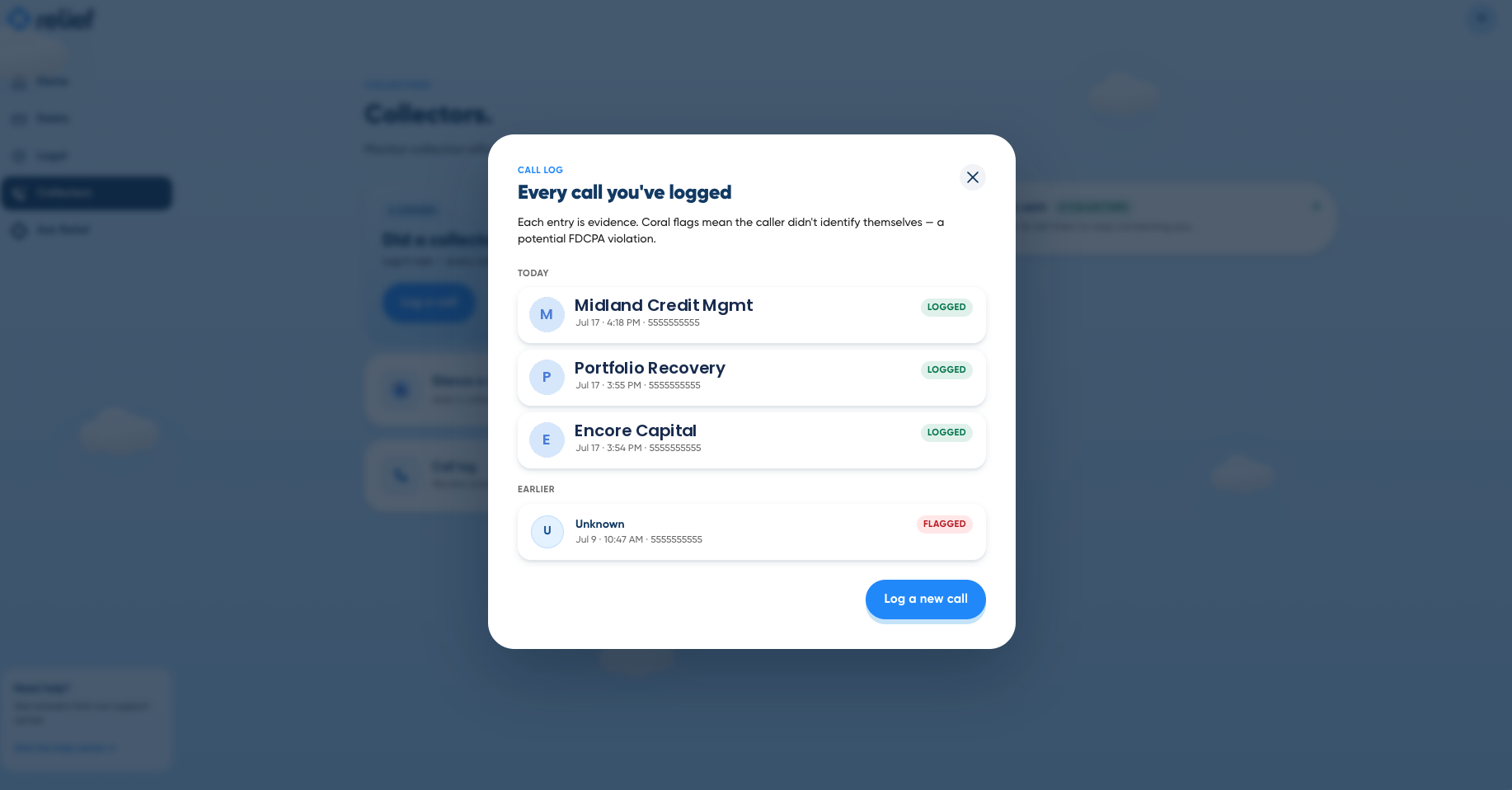
Relief lets you log every call and letter, flags activity that may deserve a closer look, and keeps it all as a timestamped record. Starting that record while the account is still with BMI Federal Credit Union means you already have the history if it moves to a collector, which is when the strongest protections kick in. Outcomes vary, depend on the evidence and the specific conduct, and are never guaranteed.
Keep the receipts Relief members log calls, letters, and voicemails in seconds — and the app turns them into a timestamped case file.
See howCan I ask BMI Federal Credit Union for a hardship program?
Worth asking, and it's an option that mostly disappears once the account is sold. Many banks and lenders run internal hardship or forbearance programs for people going through job loss, medical issues, or a temporary income drop. Depending on the company, these can involve a reduced interest rate, a lower minimum payment, a fixed repayment plan, or a short pause.
Terms vary by company and aren't guaranteed. Ask what's available, get the terms in writing before you agree, and confirm how the arrangement will be reported to the credit bureaus—that last part is the one people forget to ask.
How do I settle a debt with BMI Federal Credit Union?
If the debt is valid and you're in a position to resolve it, you may be able to pay less than the full amount owed. Relief's debt reduction requests are designed to help you take control of the situation—without the endless back-and-forth or pressure tactics of traditional settlement approaches.
With a reduction request, you can:
- Secure a lower payoff amount
- Avoid the stress of phone calls and negotiations
- Submit your request automatically within minutes, right through the Relief app
We've seen users save between 35% and 60% off their original balance, sometimes even more. But it all depends on your creditor and your circumstances. The process is fully automated and self-guided, meaning you stay in control at every step. We work directly with your creditor to present a strong, data-backed offer that increases your chances of approval.
Why does this work?
Because the math changes once an account has been written off internally. Before that point, a lender is generally holding out for full repayment. After charge-off, they're deciding between recovering something now and selling the account to a debt buyer for a fraction of the balance—and a firm offer in hand often compares well against that.
Ultimately, getting something is better than getting nothing. Settlement offers give both parties a clean resolution: you pay less, and they close the account and move on.
Settling your debt not only saves you money, but also helps close the chapter so you can start rebuilding your credit and move forward without the constant stress of collections.
Two things to confirm in writing before you pay: how the account will be reported to the credit bureaus after settlement, and that the remaining balance is treated as resolved. Forgiven debt over a certain amount may also be reported to the IRS as income, so it's worth asking about.
What if BMI Federal Credit Union isn't eligible for automated requests?
Eligibility varies, and not every creditor supports requests submitted through the app. If BMI Federal Credit Union isn't currently eligible, Relief can still help you prepare:
- Estimated benchmark data, where available
- A conversation blueprint with suggested talking points
- Guidance on what to gather before you reach out
- Recommended questions to ask
You stay in control and decide whether to contact BMI Federal Credit Union directly.
Relief makes it easy to request a lower balance. Your creditor decides from there.
Get ReliefWill BMI Federal Credit Union settle for less?
Sometimes. Original creditors tend to be less flexible than debt buyers before charge-off and more flexible after, because that's when the alternative becomes selling the account at a steep discount. Many people are able to resolve accounts for less, especially where the debt is older or a lump-sum payment is possible. That said, BMI Federal Credit Union sets its own policy, is under no obligation to make an offer, and the outcome depends specifically on your account.
Can BMI Federal Credit Union sue me?
Yes, though most creditors place accounts with an outside law firm before it gets that far. If you're served, check the plaintiff's name carefully—the party suing you may be a collection law firm or a debt buyer that purchased the account rather than BMI Federal Credit Union itself.
Either way, once you're officially served with court documents—a summons and complaint—you're on the clock. Most courts give you just 14–30 days to respond, depending on your state.
Missing the deadline is how default judgments happen
If you ignore the summons, the judge may issue a default judgment, giving the plaintiff the legal right to garnish your wages, freeze your bank accounts, and add court fees and legal costs to your debt.
Filing a response is critical. It keeps the case alive, makes the other side prove what they're claiming, and usually leaves the door open to settle.
A summons notifies you of the lawsuit and includes key details like:
- The name and location of the court
- The names of both parties
- Your case number
- Deadlines for your response
A complaint outlines what the creditor is claiming, often in numbered paragraphs. Together, these documents kick off the legal process, and the clock starts ticking.
And with Relief's legal support tools, you don't have to do it on your own.
Here's how Relief helps you respond:
- AI-assisted review of the summons, complaint, and any notices you've received
- Response drafting support and instructions for filing your answer
- A review of the account and the contact history for potential violations
- Access to independent attorneys at preferred pricing, with a free consultation scheduled in the app
This not only protects you from default judgment, but also gives you the option to still settle the debt—often for less than the full amount.
How to Get Help
Your Relief membership includes tools for understanding the account, requesting a lower balance, and staying ahead of it if it gets sold or placed with a collector.
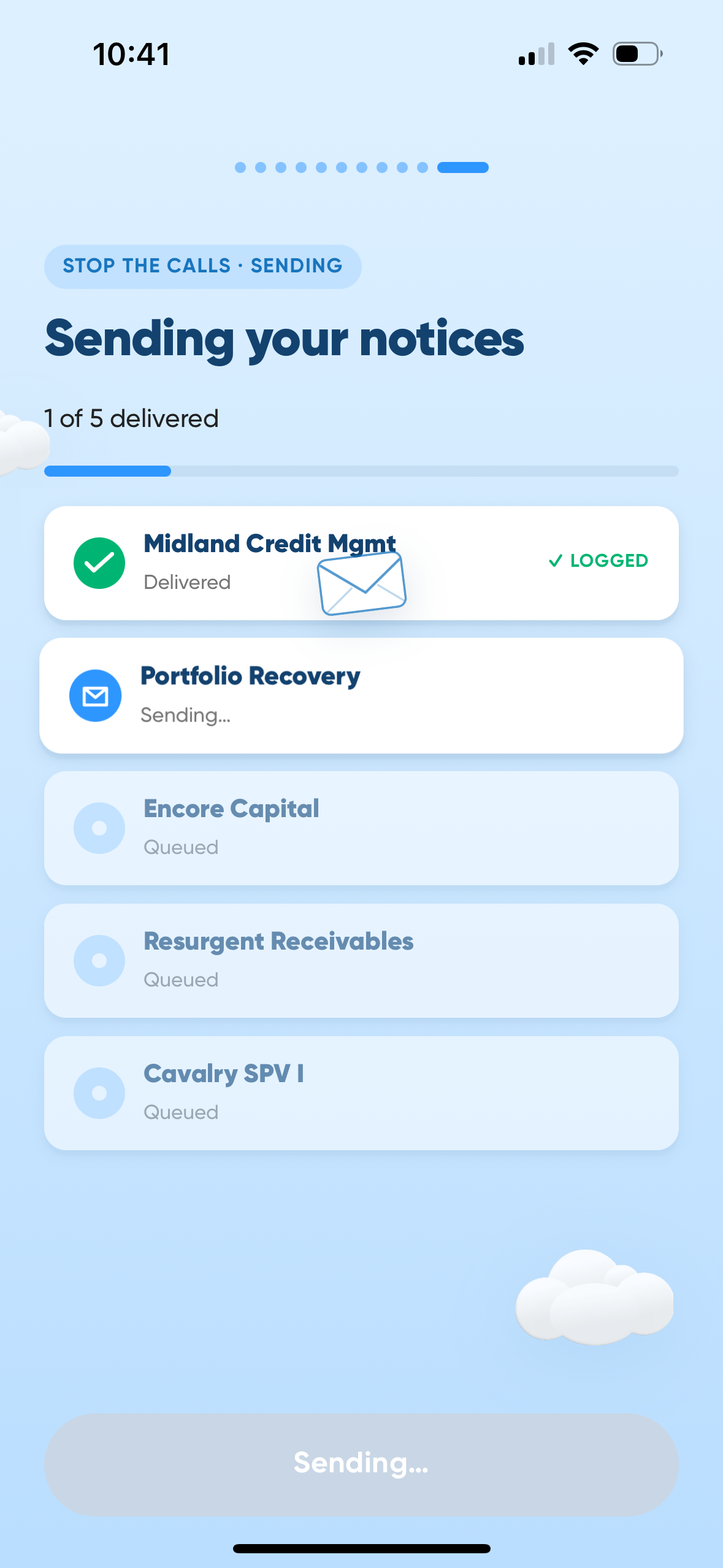
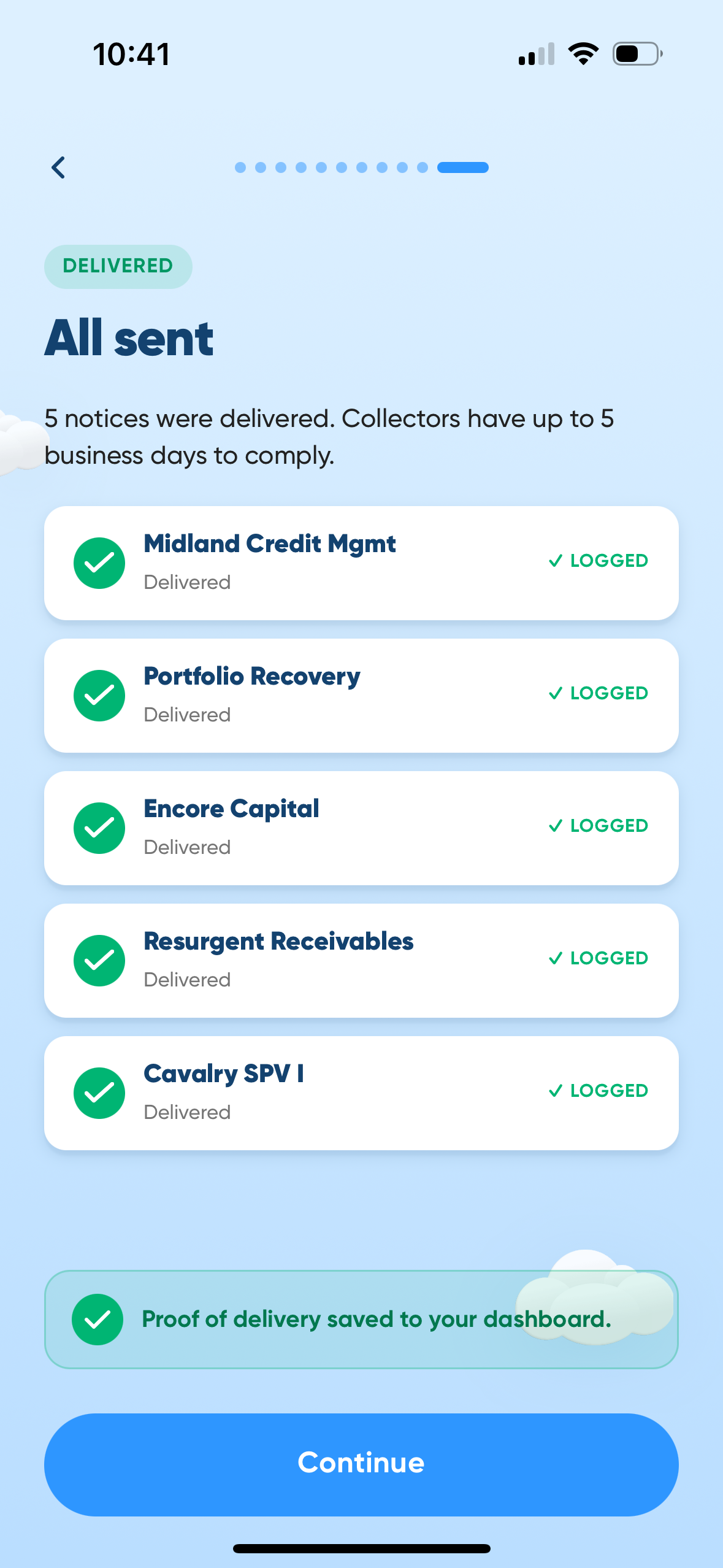
Relief doesn't make decisions for you. You stay in control of what gets submitted and which options you take. No paperwork. No pressure. Just a smarter way to deal with collections.
Creditor eligibility and participation may vary over time. Whether an account qualifies for any Relief tool depends on your creditor's current policies and the information available from your credit report, and can change without notice. A creditor that participates today may not later, and vice versa.
Creditors independently decide whether to accept, reject, or counter any request, and responses may take up to 60 days. Outcomes vary and there is no guarantee of any specific result. You pay your creditor directly.
Legal tools are provided for informational purposes only and do not constitute legal advice or legal representation. Relief is not a law firm; attorney services, where available, are provided by independent attorneys. Deadlines, statutes, and consumer protections vary by state. Relief is not a lender, creditor, or debt collector, and is not affiliated with BMI Federal Credit Union.
Key Takeaways
| Topic | What to Know |
|---|---|
| Who BMI Federal Credit Union Is | Ohio credit union offering deposit accounts, consumer loans, and credit cards. |
| Why They're Contacting You | You're behind on an account you opened with them, and it hasn't been sold or placed yet |
| What Happens If You Ignore Them | Fees and interest accrue, credit damage, then charge-off and sale to a debt buyer or placement with a collector |
| What Rules Apply | The FDCPA generally doesn't cover original creditors, but the FCRA, the TCPA, federal UDAAP rules, and some state statutes do |
| Your Options | Validate the debt, ask about a hardship program, settle for less, or defend a lawsuit |
| How Relief Helps | Reduction requests, savings estimates, account monitoring, and help responding to legal notices |
| What to Do If Sued | Respond within 14–30 days—and check whether the plaintiff is BMI Federal Credit Union or a firm acting for them |
Stop guessing at your next move
Relief gives you the tools and the information to act, without the phone calls.
Get started with ReliefMembership from $20/month · self-service platform · not a law firm or debt collector · outcomes vary

Send cease & desist letters in a few taps and log every call as evidence.
⚠️ Think a collector broke the law?
The app flags potential FDCPA violations in what you log.
⚖️ Facing a debt lawsuit?
Get help answering legal notices with a few taps.
💸 Want to reduce a debt?
Request a lower balance when you're ready.